
Hemp fiber is one of the most important long-term opportunities for the hemp industry. The stalk of the hemp plant can be used for bast fiber, hurd, building materials, animal bedding, mulch, paper, biocomposites, and other industrial applications. But the real story is not just the fiber. It is the entire crop system that can grow around it.
For hemp fiber to work, farmers need more than excitement. They need buyers, processors, equipment, storage, agronomy support, and a clear plan for what happens after harvest. A field of hemp stalks is not a market by itself. The crop becomes valuable when it can move into a reliable processing chain.
That is why fiber hemp should be viewed as infrastructure agriculture. The farmer is only one part of the system. Decortication, drying, baling, transportation, grading, and manufacturing all matter. If those pieces are missing, farmers carry too much risk. If those pieces are built carefully, hemp fiber can become a real regional industry.
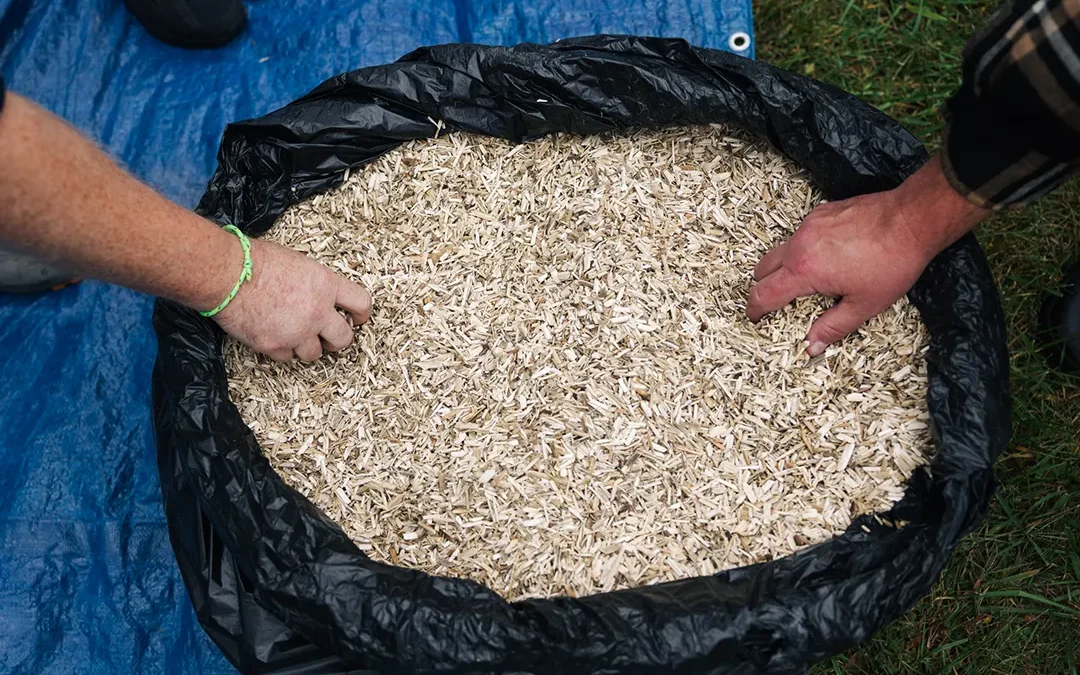
Hemp is attractive because the plant produces useful biomass. The outside of the stalk contains bast fiber, while the woody inner core is known as hurd or shiv. The bast fiber can be used in textiles, nonwovens, insulation, composites, and other products. The hurd can be used in animal bedding, hemp-lime building materials, mulch, and other applications. Research and industry sources continue to point to hemp hurd as a byproduct with multiple possible uses rather than a waste stream.
This is where biochar becomes interesting.
Biochar is made by heating biomass in a low-oxygen environment through a process called pyrolysis. The result is a carbon-rich material that can be used as a soil amendment. Depending on feedstock and production method, biochar may help improve soil structure, water-holding capacity, nutrient retention, and microbial habitat. It is also discussed as a carbon storage tool because some of the carbon in biomass can be converted into a more stable form.
For hemp, biochar could become part of a full-plant strategy. Not every pound of stalk will become premium textile fiber. Not every field will be close enough to a processor. Not every batch of hurd will fit a building-material market. But lower-value residual material may still have value if it can be converted into biochar, soil amendments, or other carbon products.
That does not mean farmers should be promised easy money from carbon credits. The carbon market is complicated. Verification, measurement, permanence, and buyer trust all matter. But it does mean hemp deserves a place in the conversation about soil health, biomass, and rural carbon opportunities.
The best path is practical. Grow hemp where there is a buyer. Match the variety to the intended market. Build processing close enough to farms to keep transportation realistic. Use the best fiber for the highest-value markets. Use hurd and residual material wisely. Explore biochar where the economics and science make sense.
Hemp fiber should not be sold as magic. It should be built like a serious crop and processing industry. Biochar should not be treated as a buzzword. It should be tested, measured, and used where it adds real value.
The future of hemp fiber will depend on whether we can connect the field to the factory and the leftover biomass back to the soil. That is the kind of circular agricultural system hemp is well suited to support.