
Hemp is often talked about as a plant for CBD, fiber, building materials, or policy debates. But one of the simplest and most practical parts of the plant is also one of the most overlooked: hemp grain.
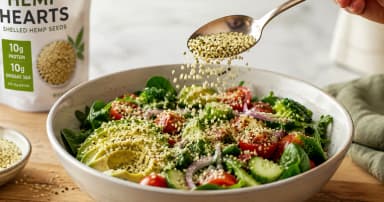
Hemp grain comes from the seed of the hemp plant. Once the outer shell is removed, the soft inside is commonly sold as hemp hearts. These small seeds have a mild, nutty flavor and can be used in everyday foods without much effort. They can be sprinkled over salads, stirred into oatmeal, blended into smoothies, added to baked goods, or used as a plant-based ingredient in snacks, protein powders, and food products.
That matters because hemp grain gives the industry something very different from cannabinoids. It is not about intoxication. It is not about getting high. It is not about walking the line between hemp and marijuana. Hemp grain is food. It belongs in the same conversation as flax, chia, sunflower seeds, oats, beans, lentils, and other healthy agricultural crops.
For farmers, hemp grain can become part of a real rotation crop strategy. The crop can be grown for seed, and the remaining stalks may still have value for fiber, bedding, hurd, mulch, compost, building materials, or future processing opportunities. That is where the long-term promise of hemp becomes interesting. A farmer should not have to depend on one volatile product category. A stronger hemp economy will come from using more of the plant.
For consumers, hemp grain is easy to understand. People already know what seeds and plant proteins are. They know what a smoothie is. They know what a salad topping is. They know what granola, snack bars, and protein mixes are. Hemp hearts fit into normal food habits without requiring a policy lecture.
For the hemp industry, grain also helps rebuild credibility. The early post-2018 hemp boom was heavily focused on CBD. That created excitement, but it also created oversupply, price crashes, confusion, and a marketplace that eventually became tangled with intoxicating cannabinoid products. Hemp grain offers a cleaner story. It brings the conversation back to agriculture, nutrition, processing, food manufacturing, and American supply chains.
That does not mean hemp grain is easy. Farmers still need reliable genetics, buyers, cleaning equipment, storage, processing, distribution, and consumer demand. Food companies need consistency. Regulators need clarity. Consumers need education. But those are normal agricultural challenges, not the same kind of legal confusion that has surrounded intoxicating hemp products.
The opportunity is to treat hemp grain like a serious crop, not a novelty. That means building regional processing, supporting food entrepreneurs, encouraging universities and extension services to study best practices, and helping consumers understand how simple it is to use hemp hearts in everyday meals.
Hemp grain will not fix the whole hemp industry by itself. No single market will. But it is one of the most practical lanes available. It can support farmers, feed people, create value-added products, and help move hemp away from the narrow idea that the plant is only about cannabinoids.
If hemp is going to become a normal American crop again, hemp grain needs to be part of that story. It is simple, useful, nutritious, and easy to explain. That is exactly the kind of foundation the industry needs.